Getting Results
Nine Ways Salespeople Can Build Trust and Rapport with Their Clients and Prospects at Corporate Events
Recently one of my clients asked me to explain exactly how his salespeople and executives can get the most out of their upcoming hospitality event.
I assembled all the tips and ideas I’ve picked up from clients, salespeople, and executives, added some psychology from Robert Cialdini, and went to work.
Recently one of my clients asked me to explain exactly how his salespeople and executives can get the most out of their upcoming hospitality event.
I assembled all the tips and ideas I’ve picked up from clients, salespeople, and executives, added some psychology from Robert Cialdini, and went to work.
This mini-masterclass on building trust and rapport at events explains the best practices for getting people to your event, engaging clients and prospects during the event, and having effective follow up conversations afterward.
Enjoy the video.
If I can be any service - answering questions or helping you design your own client engagement event - don’t hesitate to reach out at (561) 596 3877.
MindShift: Understanding Events From The Guests Perspective Improves Event Metrics
Any sales and negotiation trainer will tell you it's essential to know your counterpart. Engaging and influencing another person is much easier when you understand their perspective.
That's a key component to successful events, too.
Any sales and negotiation trainer will tell you it's essential to know your counterpart. Engaging and influencing another person is much easier when you understand their perspective.
That's a key component to successful events, too. When I'm getting ready to perform at an event, I want to understand what it's like to be a guest or participant.
I know that walking into the clubhouse at Augusta National Golf Club was intimidating.
Attending "business social events" can be uncomfortable. Will we talk "business" or "social" during cocktails? Will someone be offended if I discuss business?
Even though I'm in a sea of people at a customer appreciation event during a trade show or conference, I feel a little "lonely in a crowd."
I rarely raise my hand to comment during a break-out session because people might disapprove of my ideas.
I know I'm normal, too.
That's why I usually start by entertaining on the edges of a party.
I get those people laughing, forming them into a little crowd.
The fun helps them get to know each other.
Now, they're engaged in the event.
I do that in all four corners of the room.
Then I start working to the middle of the event where the extroverted people are.
They naturally laugh louder. They attract people from the edges of the room.
Now, we're all having fun together.
Rinse. Wash. Repeat all night.
That's what turns a typical cocktail party into an event people look forward to attending next year.
Want to see what this looks like in action?
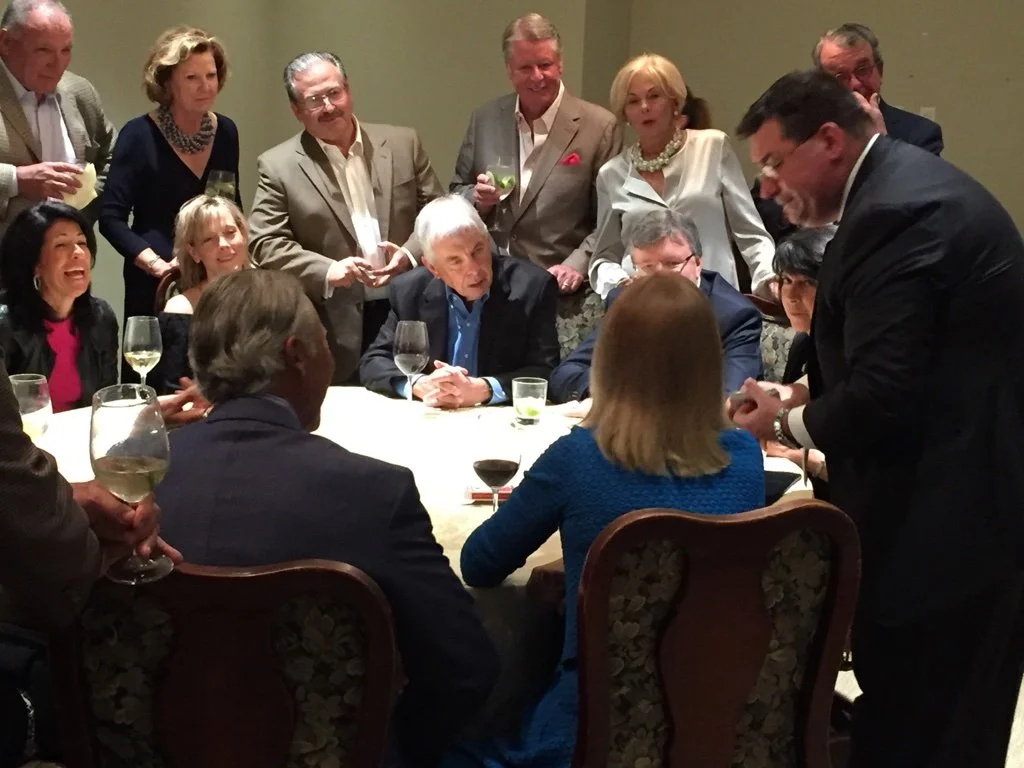
Here are some photos from a 2018 event, where I used the Always Something More strategy to engage the audience, get them laughing and having fun together, and eventually turned the group into one, big laughing crowd.
The first “set” was for a few people who were just arriving…
Then I entertained a group on the other side of the room…
Still another group in another corner…
Then people started to walk over to where I was performing…
Until we collected almost the entire room.
That’s how it works…
Of course, magic doesn’t solve every event challenge or work in every situation.
The best way to figure out if it can help you get the results you want from your event is to have a conversation.
I’ll ask you a lot of questions about the event you’re planning, what you’ve done in the past, and what you hope to accomplish this time.
Based on what you tell me, I can tell you exactly what other people like you have done in your particular situation.
To set an appointment, call (561) 596 3877, or click here to schedule an appointment through Calendly.
What are The Pictures Saying About Your Event?
Great images tell a story about the event - who was there, what happened, and what did people think about it.
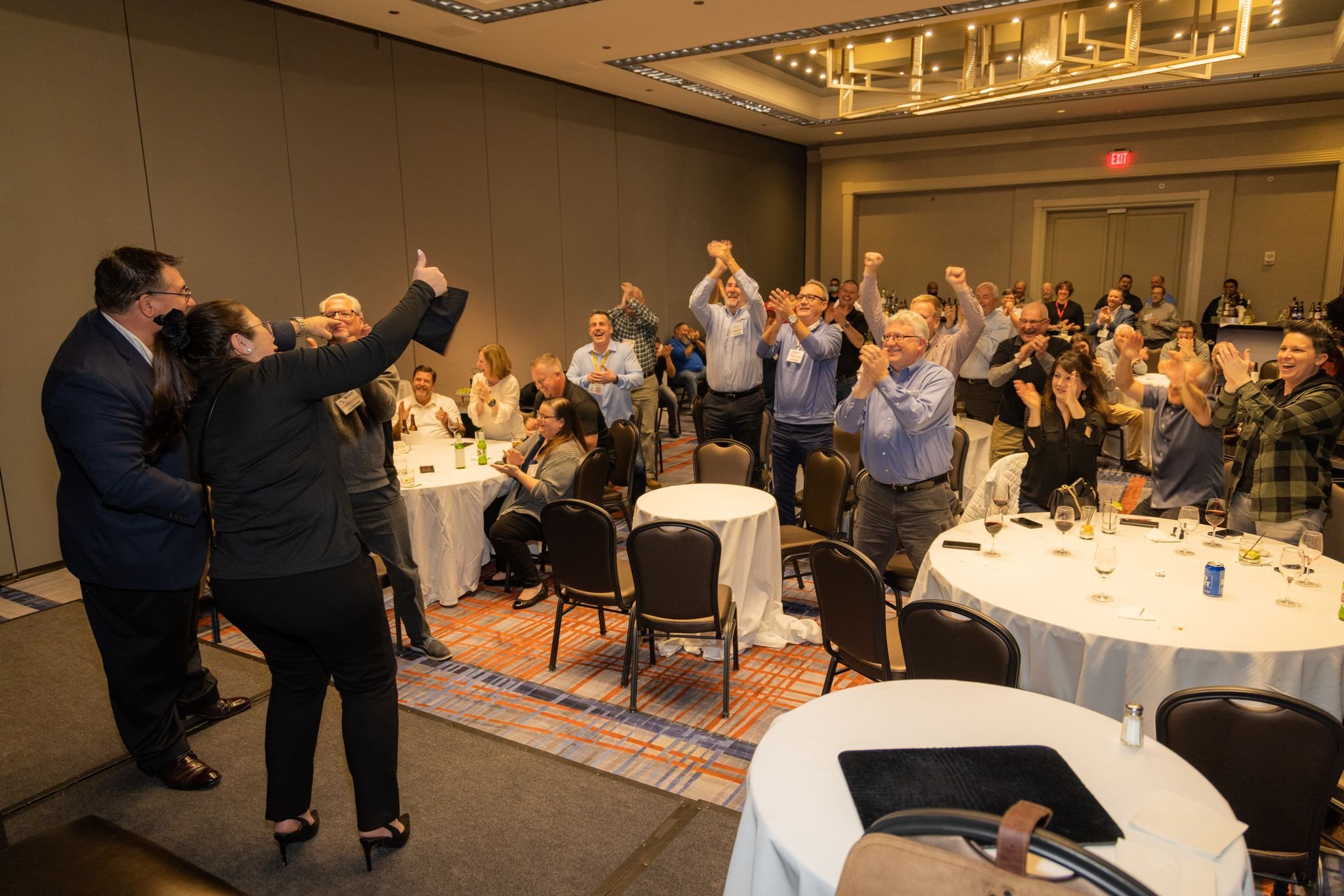
Great images tell a story about the event - who was there, what happened, and how people felt.
More importantly, they have an impact on your next event by:
Strengthening the memory of the event for those who did attend
Developing curiosity among people who did not attend
Creating anticipation for the future event
But the images I saw after New Year’s Eve 2022 missed the mark.
I saw surprisingly few pictures of performers interacting with the people at the event. Worse, the audience had their back to the entertainment in several images.
Typically, we want to see people laughing, smiling, and slapping each other on the back. Some of the people in the pictures looked a little bored.
These were probably fantastic events, but the images did not tell that story.
Here are three ideas that might help you get better images from your next event:
Work with the photographer. A great photographer knows how to capture “the moment.”
Talk to Your Entertainers. Experienced performers know how to work with the photographer to create those images “on the fly.”
Record a video on your phone. A video is like thousands of still images, so you can select the image you want using the screenshot function.
Of course, events are more than laughs and smiles. Pictures should capture and convey conflict and drama, feelings of frustration and anguish, insightful breakthroughs, and moments of ultimate triumph.
Having all those moments requires experiences that bring people together in an emotionally compelling way. Something has to trigger the laughs, facilitate the connection, and create an experience your guests are talking about for months to come.
Maybe I can help.
If you are open to a conversation about an upcoming event, what you have done in the past, how you evaluate the success of your event, and what you hope to achieve this year, call (561) 596-3877 or click here to schedule an appointment.
The 2023 Rules
10 Lessons Learned in 2022 and Carried Forward in 2023
10 Lessons Learned in 2022 and Carried Forward:
Whether it’s reading from LinkedIn, other people’s blogs, or just plain life experience, I picked up a lot of great stuff in 2022. Here’s a short list of ten things I’m adding to my mindset in 2023.
1) The Matt Nettleton Rule: The current situation is neither permanent nor pervasive.
Everything is changing, and every situation can be changed - even if that just means looking in a different place or talking to different people.
2) The Elon Musk Rule: Life is so much simpler when you stop explaining yourself to people and just do what works for you.
3) Dad's Rule #1: Someone's always making money somewhere.
Go find that person and sell him something.
4) Dad's Rule #2: It's Always Something.
There's always a problem, frustration, irritation, or disaster happening. Stop expecting a perfect day and have fun.
5) Scott Adams' Rule: Follow the Money
Works almost 100% of the time if you want to know "why is that happening" and "what happens next."
6) Raffi Rule: All I really need is a song in my heart, food in my belly, and love in my family.
7) The Mary Sue Rule: Don't start at the top. People prefer to hear about the Hero's Journey - start at the bottom, identify the challenge, adapt to meet it, and overcome it.
8) The Marine Corps Rule: Improvise. Adapt. Overcome.
9) Benjamin's Rule: Don't yell at people; they have to discover they want to change.
10) Nema Semnani's Rule: Fear is a liar - it's means well, but hides opportunity.
Last year was a fantastic growth year in events, too.
I’ve got a lot of new “rules” that are key to successful hospitality events, trade shows, client appreciation events, employee appreciation events, team building, holiday parties, and all the things I do to help my clients.
Looking forward to sharing those with you in 2023!
If you’re open to a conversation about the events you’re planning in 2023 - what you’ve done in the past, how you measure success, and what you hope to accomplish in 2023 - I’m happy to share what people like you have done in your particular situation.
Give a call at (561) 596 3877 or click here to schedule an appointment.
From the WD Armstrong / LongItem meeting in Atlanta last year - great audience enjoying the all-new version of Magic with YOUR Mind. We enjoyed three separate standing ovations during that show!
What Your Marketing and Events Team Needs to Know About Entertaining Executives and Engineers
For over 20 years, I’ve wondered why my magic and mentalism always seemed to land so well with engineers, heavy industry executives, doctors, lawyers, and business people. They called me to their events year after year.
Their marketing departments and event planners seemed to think they were crazy, too. “Why would magic be a good fit for this event?”
Now I know.
I finally figured it out. I feel like I have to share this with you.
For over 20 years, I’ve wondered why my magic and mentalism always seemed to land so well with engineers, heavy industry executives, doctors, lawyers, and business people.
These people bring me to events like The Masters, and they want me entertaining their clients and customers at hospitality events, executive summits, and sales meetings.
Their marketing departments and event planners seemed to think they were crazy, too. “Why would magic be a good fit for this event?”
Now I know.
It’s all about DISC.
If you’re unfamiliar with DISC, it’s a four-way classification system psychologists use to categorize communication styles.
Your communication style has a tremendous impact on how you perceive others and how they perceive you. I don’t have time to go into it here, but you can learn more here.
The DISC profiles split two ways:
“task oriented people” (Type C and D) vs. “people oriented people” (Type S and I)
Typically, event planners are very detail-oriented people who really like to talk with other people and have fun conversations.
Most of them are in the Type S and I groups: they like everyone to agree, they love to talk, and they want everyone to like them. They get energy from talking to others.
Focusing on “things” and “problems” takes energy for an I or S (not that they can’t do it, but it takes energy).
Engineers and executives, however, are typically Type C and D. They are task-oriented people, they get energy from solving problems and doing things, they like to move fast, they like to compete and face challenges. Doing stuff gives them energy.
“Chit chat” and “small talk” drains energy for a C or D (not that they can’t do it or don’t like it, but it takes energy).
The problem is that everyone thinks everyone else is just like them.
So when an event planner says,
“Our people don’t need anything to get them laughing and having fun together, they all know each other. They just go to bed at 9pm”
She is 100% correct. Her people do know each other, and they can talk and have fun together. She doesn’t think they need anything to make the cocktail party work, because networking talk and mingling gives her energy.
At the same time, the Type C and D engineers and executives at the event will spend a lot of energy doing the small talk, and they’ll get tired, disconnect, start answering emails on their phone, or even leave the event early.
When I discovered DISC, I realized why my engineering and executive clients kept requesting me back for their events year after year:
Having a problem or a challenge to deal with gives Types C and D a tremendous amount of energy. Working on a problem together actually helps them bond and build rapport with other Cs and Ds.
So having their mind-blown by a magic trick, watching other people get their minds blown, trying to figure out the secrets, and then talking about the magic afterward played right into their communication styles.
The magic and mind-reading gave them tremendous energy in a situation they would normally find draining.
That’s why they stayed later at the events, why they built stronger relationships around the magic, and why they were talking about the events months later.
What does this mean for your events?
I don’t know.
Magic and mind-reading seem to play well for executives, engineers, spreadsheet-enthusiasts, and people who work on “things” and details, but they’re probably not the only things that appeal to the Type C and D.
But you’re open to a conversation about an upcoming event, give me call.
I never noticed this until I wrote this post, but in this image there’s at least one CEO, an electrical engineer, two business consultants, and a guy who manages casinos. All Type C and D personalities, and given that like-attracts-like, you can expect that their spouses are the same…
Robert Sereci Shares Three Unexpected Secrets to Medinah's Member/Guest Success
Hosting over 300 players every year, The Medinah Classic is one of the largest club invitational tournaments in the US. Medinah’s General Manager Robert Sereci takes a few minutes to dig deeper into why entertainment is an essential part of the club’s member/guest success.
Medinah Country Club’s legendary clubhouse has been the background for a lot of golf history and some spectacular member events
Background: Since its inception in 1924, Medinah Country Club has hosted many major tournaments. Notably, three U.S. Opens, a U.S. Senior Open, the Ryder Cup, and the BMW Championship, all against a historic backdrop, including their iconic clubhouse, the legendary Course #3, and two additional 18-hole golf courses. Hosting approximately 300 players every year, the club’s premier event - the annual Medinah Classic - is among the three largest member/guest events in the U.S.
For the 2021 Medinah Classic, the club brought in Mike Duseberg to entertain the players after their practice rounds. Over cocktails and barbecue, players crowded around Mike to participate in the magic and have fun together.
Mark Gallaudet, the Medinah’s assistant general manager, reflected, “The staff kept saying ‘Wow! That guy can work a room.’ The members just gravitated toward him.”
General Manager and Chief Operating Officer Robert Sereci took a few minutes to dig deeper into why the entertainment was an essential part of Medinah’s member/guest event:
Insight #1: Magic creates a personalized experience for each member and his guest.
Mike’s unique performing style and his “Always Something More” system ensure members and their guests see magic several times throughout the night, and everyone gets to participate in the magic themselves.
Robert Sereci: “There are not many activities during a member/guest event where participants can sit and enjoy for even a brief time, someone entertaining them in a very intimate setting. Mike is up close, in a very intimate environment, and to me, that is a big deal; it enhances the experience. It gives participants one more thing to talk about.”
Insight #2: Variety keeps players engaged.
After a long day of golf playing 18 to 27 holes, the players attention can wander. It’s important they stay on-site and enjoy the club’s excellent amenities and food and beverage opportunities. Magic during the evening gave the participants another reason to stick around and have fun together.
Robert Sereci: “Trying to keep our members and guests engaged is not as easy as it sounds. When an event lasts multiple days for a long period, we’re trying to hold their attention on the event - that's why we have TVs and other entertainment. Getting them to relax and laugh after the day’s round of golf loosens them up. That is not always easy to do.”
Insight #3: Take the pressure off the members and their guests
There can be a lot of pressure during a member/guest event: The players all feel pressure to score well on the golf course during the day.
In the evening, a new pressure develops: the members feel tremendous pressure to “be interesting” and keep their guests entertained and engaged. Similarly, the guests feel pressure to “be on their best behavior” at their hosts’ club.
Robert Sereci: “Entertainment at our member/guest significant, because, across several days, members and guests are performing, and they get tired. They can get stressed out. Good entertainment takes their mind away from golf and allows attendees to sit back relax, while someone else entertains them, so that they can be participants and spectators for a while.”
This year, the tournament was a tremendous success for Medinah Country Club, and the members and guests had a great experience they look forward to repeating in 2022.
Robert Sereci: “The members said things like, ‘engaging,’ ‘entertaining,’ and ‘this guy is incredibly talented.’ It went very well, and the chairman was thrilled!”
If you’d like to create an engaging and entertaining experience for your players during your next Member/Guest, Mike Duseberg will be happy to describe what he’s done for other clubs like yours. Click here to schedule a conversation or call (561) 596-3877.
How To Take Advantage of a "Networking Reception in the Exhibit Hall” and Have More Conversations with People Who Will Buy From You
Exhibitors: What’s your strategy for “the networking reception in the exhibit hall?”
The organizer has given you a huge opportunity! The show attendees - including the ones you want to meet - will be on the show floor!
But how do you get them to your booth and “networking” with your sales people during the show?
Almost every medium-sized trade show now begins with a “welcome party in the exhibit hall” and ends each day with a “networking reception in the exhibit call.”
Are these really “networking receptions” or are they just more “exhibit hall time?"
If you’ve attended one of these events, you’ll notice that people are in a different mood. They aren’t wandering the trade show floor or marching to an appointment at a booth. They really are walking around, talking with each other, and “networking.”
That makes these events a much bigger opportunity to capture your idea prospect’s attention, focus it on your booth, and create further opportunities to connect with your prospect throughout the show (and afterward).
There are two ways you can approach this event.
The first, would be to simply staff the booth as you typically would. Put out some pens and literature, stand proudly, and hope that someone reads your signage and decides to talk to you.
Or, you could do what real master networkers do at real networking events - you could be really interesting, and get interesting people interested in what you do.
Great networkers always have a conversation starter - something that gets people’s attention, gets them focused on your conversation, and ideally gets the other person talking about themselves.
Great networkers also have an elevator pitch - and great networkers know that an elevator pitch doesn’t tell people about you, as much as it tells people about the problem that you solve for other people, and then asks them if they’ve ever had that problem. (Check out David Sandler’s You Can’t Teach a Kid to Ride a Bike at a Seminar for more).
And finally, great networkers know how to create a follow up conversation after the interaction. They don’t send emails or offer to send literature - they set an appointment to follow up, have a productive conversation, and agree to a solution if appropriate.
So how do you do that at scale during a “Networking Reception in the Exhibit Hall.”
First, take advantage of how the situation has been framed for the guests. This isn’t really “trade show time,” it’s actually “a party.” There’s drink stations, maybe some servers passing something to eat, and sometimes a little music playing louder than during the usual trade show time to keep things lively.
Join in.
Now is a fantastic time to do something unique and remarkable in your trade show booth. I’ve seen exhibitors install blackjack tables, caricature artists, magicians, mentalists, cooking demonstrations, and other performers in the booth to capture attention and focus it on the booth.
A cybersecurity show in Florida actually required all the exhibitors to present some kind of entertainment to make the “reception on the exhibit hall floor” more interesting for the guests.
This is a relatively easy time to build a crowd because most attendees are focused on talking with each other and having some fun before the show starts. They’re happy to walk over and enjoy something fun. In fact, people are happy to bring their friends over to participate in the fun - because it’s a party!
You’ll get the attention of people who never planned to visit your trade show booth during the show: the clients who already know what you do but don’t know about the new products and services you should be selling them, the clients who used to work with you but don’t know that there’s new products and service they should be buying from you now, and your competitors’ clients who don’t know what they’re missing out on by not working with you.
You’ll get their attention because you’re not trying to sell them anything, you’re just offering something fun.
“Did you see what he just did over there? You’ve got to go over and check that out…”
Next, you’ll want to get your booth staff engaged in the entertainment as well, so they’re having fun along with the attendees at the show. They’re all laughing together, creating a sense of connection, and building some rapport so they feel like they know each other a little bit.
Then, you make your move. Just when the show hits its most engaging point, your entertainer delivers your company’s elevator pitch. Just that tightly crafted, clear statement of the problem your company solves for people similar to the people at this show.
Finally, he delivers a very direct statement about what people should do if they have that problem and want to learn more about how to solve it.
What happens then?
Some people will leave. The entertainment is over, and they don’t need to talk to you.
Some people will follow the call to action immediately. Your booth staff will be able to talk to them and qualify them for an appointment right in the booth.
Some people will remember the call to action and follow up during the rest of the show. They’ll remember visiting your booth during the reception, and they’ll have a way to start a conversation with you during regular show hours.
Some people will come up to your reps during the conference and start talking with them outside of show hours, too. They’ve developed some connection during the entertainment, which means your salespeople can get more honest and complete answers to their qualifying questions.
Would you deploy a strategy like this? In the past, our clients have described this kind of technique as a “secret weapon” that differentiated their booth and their company from the others at the event. Their competitors occasionally described it as “an unfair advance,” but as a famous US Army Colonel said, “The last thing I want to do is be in a fair fight.”
Do you have a strategy for engaging your prospects and clients during receptions on the trade show floor? Does your company have an “elevator pitch” that makes your prospective clients want to engage with your team and learn how they can help them? Do you want to go home with a long roll of qualified prospects who are looking forward to your phone calls?
I don’t know if I can help you, but if you’re open to a conversation about your trade show strategy and objectives, I’d be happy to share what other companies have done in your particular situation. Give a call at (561) 596 3877 or schedule an appointment here.
How To Use The "Pepsi Challenge" to Capture Market Share At Your Next Trade Show Or Conference Event
Pepsi’s biggest problem was that everyone already knew what Coca Cola tasted like. Believe it or not, your best conference and trade show prospects are ignoring you for the same reason…
The new season of “The Food that Built America” is a fantastic show: there’s drama, conflict, emotion, and lots of fascinating stories about the brands we see almost every day. It’s both inspiring and entertaining.
And there’s some mind-blowing lessons on business strategy too - real stuff you can use right now.
We just finished the episode on the “cola wars.” We all know the story of the “Pepsi Challenge,” where Pepsi sent people into shopping malls and street corners, asking people if they could tell which cup had Pepsi and which had Coca Cola by taste alone.
At the time, Pepsi had about 7% market share compared to Coca Cola (which had 92 of the other 93%).
Why? Because Coke was the original cola drink, and it never occurred to people to change. They never tried Pepsi. They didn’t even know how it tasted, and they didn’t care because they knew they liked Coke.
And that's why the Pepsi Challenge was so powerful. It grabbed people's attention, and it said, "hey, try this." And when they did, about 52% decided they liked Pepsi better - which immediately cut into Coke's market share.
So how does this apply to your presence at trade shows and conferences?
From an earlier post, you’ll remember the three most valuable prospects you can meet at a trade show or conference:
People who currently work with you and are happy.
People who work with your competitor.
People who used to work with you.
These are the people who can buy stuff that will move the needle in your business.
But there’s a problem.
Just like the Coca Cola drinkers, those three groups of people have no reason to talk to you. Your current clients don't know that you can sell them other things they also need, so they think they're "happy." Your competitor's clients are "happy," too, so they don't need you. And your prior clients think they're "happier" without you.
They aren’t going to come to your trade show booth. They aren’t going to attend your customer hospitality event, and they definitely aren’t coming to your webinar or virtual conference.
It’s not that they don’t need what you sell or want the outcomes you offer - the problem is that they’ve already decided that they don’t need to talk to you about it.
And if you can’t have a conversation, you’ll never have a sale.
So you need a "Pepsi Challenge.”
You need something that grabs your prospects attention, focuses attention on your brand in a memorable way, delivers a simple message that opens your prospects' eyes to a specific problem they probably didn’t know that you solve, and offers a clear call to action that explains how your prospect can get the outcome they want.
Our clients do that with magic and mind-reading, but there are probably dozens of other ways you can capture attention, engage your prospect, and deliver a message that makes them want to start a conversation with you.
Is this a bold statement? Does this break the rules of sales or marketing?
Not at all, really. It’s what I’ve been doing with my clients for decades, and it’s what my mentors and coaches taught their clients to do for decades before that. It’s a simple, proven, repeatable formula.
You know who really hates this? You know who calls it “unsportsmanlike” and “rude” and other negative labels?
Companies like Coca Cola. The big, established players who are successfully dominating the market by keeping their valuable clients focused on them, so they never even think of changing.
Go get ‘em.
If you’re open to a conversation about what you’re doing at trade shows and the hospitality events you’re sponsoring, the results you’re getting, and how you know you’re successful, I can share what other companies in your particular position have done and the results they’ve achieved. You can schedule a short phone call here.
How to Watch a Virtual Event (Without Staring into Your Phone, Table, or Device!)
Probably the most irritating thing about virtual events is their limited viewing capability. Most people watch them alone because it’s hard to get two or more people gathered around a device.
We figured out a better way…
Probably the most irritating thing about virtual events is their limited viewing capability. Most people watch them alone because it’s hard to get two or more people gathered around a device.
Using your “screen cast” or “screen mirroring” capability on your device, you can broadcast the virtual event to your WiFi connected television, and enjoy the event with your family just like watching TV at night.
We recommend putting your tablet or laptop on an ottoman or coffee table in front of the family during the event, so we can see you while you enjoy the show. When you’re invited to participate in the event, just unmute yourself and you’re ready to go!
This is so successful our clients have actually begun hosting “viewing parties” at their homes - their friends bring the drinks and pizza, and they provide the incredible virtual entertainment!
Here’s a quick video that explains how it works…
If you’re open to a conversation, I’m happy to explain what other companies like yours have done with their virtual events and the results they’ve achieved. Just contact the office through the button below.
Six Things That Prevent Zoom Fatigue
Probably the most common complaint we hear around virtual event is “everyone has Zoom fatigue,” which is quickly followed up by “people have short attention spans.”
Neither of these ideas are true.
“It’s a poor craftsman who blames his tools.”
Probably the most common complaint we hear around virtual event is “everyone has Zoom fatigue,” which is quickly followed up by “people have short attention spans.”
Neither of these ideas are true.
The great Dan Kennedy, who invariably advocated the use of long copy sales letters, said that “people” have short attention spans because they don’t care much about what they’re looking at. On the other hand, people will watch long videos, real long sales letters, and sit through multi-day conferences if they’re interested in what’s happening.
Here’s Proof: If you were not interested in holding the attention of your audience through a Zoom call, you would have stopped reading by now.
Recently a client compared our “Virtually Impossible” show with a one-hour, content-filled event on the impact of the presidential election on financial markets produced by a famous name brokerage. While the financial event had tried valiantly to bore him to death, he survived long enough to explain six things that he believed our event did better. (Note that none of them involve card tricks, mind reading, or oranges).
Six Ideas that Will Dramatically Improve Your Virtual Event
1) An Impressive Invitation - don't just send a colorful email or a simply blue link. Make it personal, and make the invitation something that builds anticipation. Build intrigue. Make people wonder what will happen. Give it a "can't miss" feel.
2) Punctuality - Let people know when you are going to start, and start at that time. Also, end on time. Have a countdown timer on screen before the event starts, and have a large clock visible for the performers/speakers.
3) Process - The event is supposed to achieve a goal. Let the audience know your goal, and make sure everything you do during the event moves the audience toward that goal. Let everyone involved in your event know your process, and make sure they understand where they fit into the event.
4) Preparation - Rehearse, understand the technology, and have enough experience that you can stay calm when things go wrong (they will). We’ve been doing virtual events for seven months now, and we have a developed a comfortable, repeatable routine because we’ve had dozens of things go wrong along the way.
5) Energy and Flow - Lag time, dead spots, and presentations that drag are death to a virtual event. Keep the energy up. When you write, edit ruthlessly. When you present, do not go off script. Embrace Bob Hope’s “15 Second Rule” - every 15 seconds there must be a joke, an interesting fact, a change in emotion, or an activity that advances the event toward the goal.
6) Feedback - Don't just hope for a good response, and never ask for feedback. Engineer your event so the audience wants to give you feedback after the event. Get rave reviews.
Our ideas aren't a fit for everyone, and not everyone wants our help If you're open to a conversation, I can share some details and examples of these principles at work. DM, email, or call.
Integrating Sponsors into Your Virtual Event
Here’s a “quick and dirty” example of how to smoothly integrate sponsors into your event. We took the idea from the Jerry Lewis Labor Day Telethon, where Jerry used celebrities and corporate donors to support MDA. Jerry would do a quick segment with the the sponsor, tell a few jokes, and accept their donation.
Everybody wants sponsors in their event. Whether you want someone to help pay for the expenses during the event or if you want someone to help raise a lot of money for your cause, sponsorships bring the significant revenue your event needs.
We created a “quick and dirty” example of how to smoothly integrate sponsors into your event. We took the idea from the Jerry Lewis Labor Day Telethon, where Jerry used celebrities and corporate donors to support MDA. Jerry would do a quick segment with the the sponsor, tell a few jokes, and accept their donation.
Ultimately, sponsorships are advertising, so the sponsor should talk a little bit about their company while they make a donation to the cause. This format does a great job of integrating the sponsor and their message without making everything look like a slimy sales message.
If your event isn’t a charity or fundraiser event - such as a conference or meeting - we can do something similar with out the “big check” component. I would simply bring on the sponsor’s representative, have a brief exchange about something relevant to their business (maybe something at a virtual trade show booth or a new innovation they’re releasing), do some magic with them, and move on.
Here’s a video that shows how it works and explains three key components to making this work.
Three things are important here:
The person on screen is the "face" of the company or the person your clients will interact with next.
The person participates in a magic trick, enjoys the show, and supports the cause or event with the rest of the audience.
There is a simple call to action: "Talk to Amanda to learn more" or "Thank Amanda for supporting this event" or "See Amanda for their seasonal specials."
Follow these simple steps, and you'll sell the sponsorships you need AND your sponsors will get the results they expect from their investment.
Just released: Mike Duseberg reveals all the “how to” steps to creating events that create sales referrals, and repeat business in his third booklet The Event ROI Revolution: A Planners Guide to Hospitality Events that Create Connections, Build Rapport, and Schedule Sales Appointments. Download your complimentary copy here.
Entertainment in the Post-COVID19 World - Engage, Amaze, and Entertain - Safely!
In the re-opening, how will you entertain, amaze, and engage your clients without spreading the COVID19 virus?
Entertainment in the Post-COVID19 World
Engage, Amaze, and Entertain - Safely!
Our clients are already asking - “how can we keep our guests engaged in our event and create a memorable experience and still prevent the spread of COVID19?”
I’ve spent a large part of the last three months designing and rebuilding our very successful “Magic With Your Mind” show. I am not a doctor or an immunologist, but using publicly available information from the CDC, NIH, and WHO, I have created a show that blocks all the typical ways COVID19 spreads.
We can all have fun, build rapport with our key clients, and create an incredible experience our guests will be talking about for years to come - without anyone getting sick.
Check out the video-blog below:
Mike Duseberg creates “COVID19-Safe” magic and mind-reading experiences for your next conference, meeting, association event, or club event.
When you’re ready to start planning your next event, contact our office at (561) 596 3877 or email contact@magicmeansbusiness.com